Interaction Design · Research

Spatial
Resonance
Toolkit

A participatory design framework that transforms healthcare research into collaborative, evidence-based design decisions.

Duration

4 Weeks

Role

Interaction
Designer

Duration

4 Months

Tools Used

Figma, Ai
& Ae

Deliverable

Framework
& Toolkit

Role

Interaction
Designer

Tools Used

Figma, Ai & Ae

Deliverable

Framework
& Toolkit

Year

2025

Interaction Design · Research

Spatial
Resonance
Toolkit

A participatory design framework that transforms healthcare research into collaborative, evidence-based design decisions.

Duration

4 Weeks

Role

Interaction
Designer

Duration

4 Months

Tools Used

Figma, Ai
& Ae

Deliverable

Framework
& Toolkit

Role

Interaction
Designer

Tools Used

Figma, Ai & Ae

Deliverable

Framework & Toolkit

Year

2025

Interaction Design · Research

Spatial
Resonance
Toolkit

A participatory design framework that transforms healthcare research into collaborative, evidence-based design decisions.

Duration

4 Weeks

Role

Interaction
Designer

Duration

4 Months

Tools Used

Figma, Ai
& Ae

Deliverable

Framework
& Toolkit

Year

2025

Tools Used

Figma, Ai & Ae

Deliverable

Framework
& Toolkit

Year

2025

No headings found on page

Brief

THE BRIEF

Everything started with one question.

The brief sat inside a bigger theme: love in the age of technology, before it, finding it, keeping it, and after it. The team chose the last one. Life After Love.

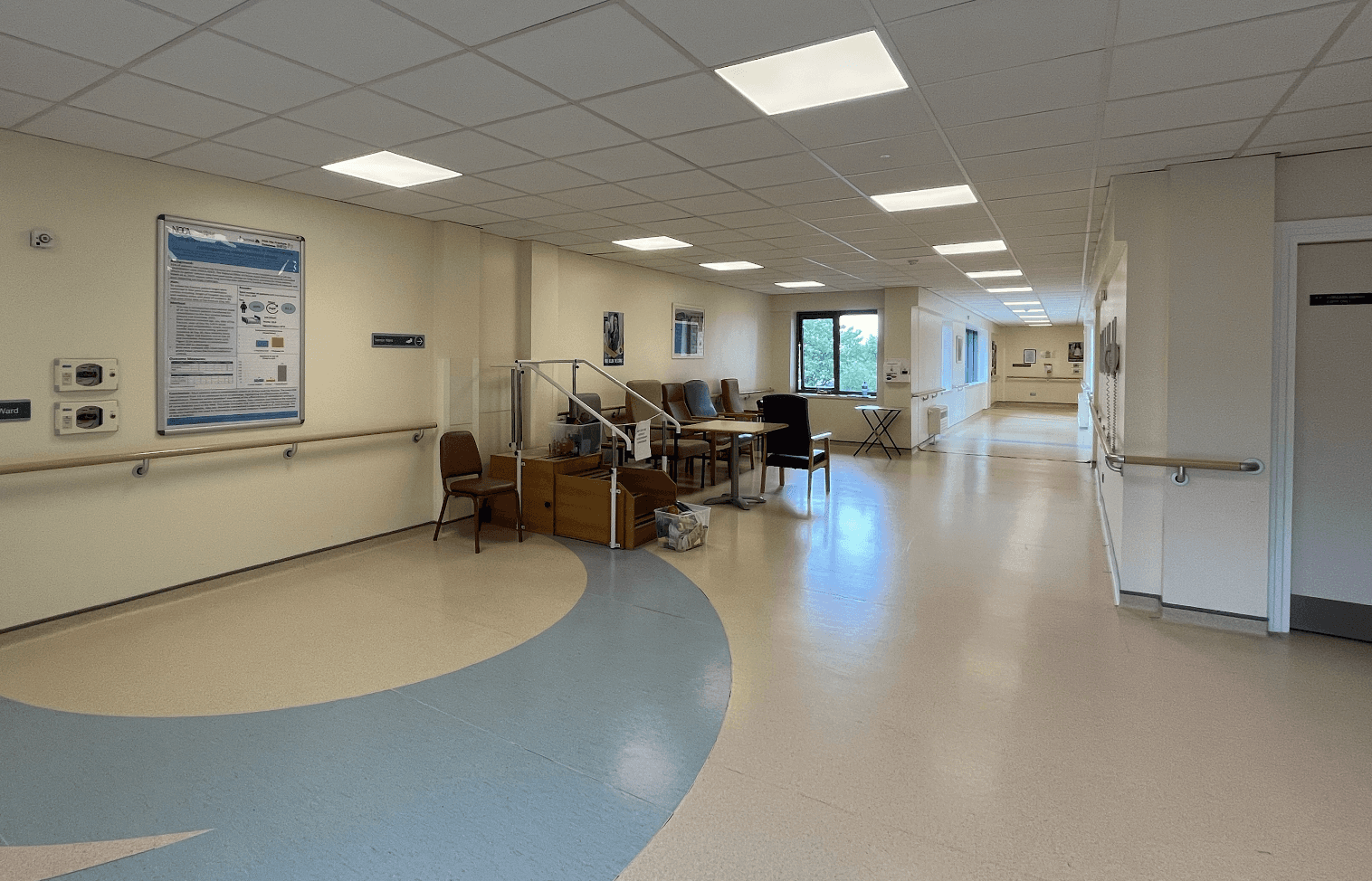
How might we design a novel common area
within a rehab hospital setting to maximise patient well-being, foster reflection, and enhance the experience of patients and their visiting families?

Design a tool that offers gentle, actionable support for people navigating a breakup, intuitive, emotionally intelligent, and rooted in what genuinely helps someone heal.

Research

RESEARCH
RESEARCH
RESEARCH

Before designing anything, I needed to understand how hospital visits were actually lived. Four phases (from clinical consultations to 25 patient sessions) each changed what I thought I was designing.

Phase 01

Phase 02

Phase 03

Phase 04

Clinical

Consultations

Purpose

Test my assumptions against clinical reality before involving patients.


Approach

Informal conversations with a medical doctor and an oncologist, focused on how visits intersect with treatment, pain and fatigue.

What I heard

On some days, the most humane thing a visit can offer is to ask nothing of the patient.


Design Impact

I dropped the idea of "programming" visits with activities, and committed instead to opt-in micro-engagements that could end without social penalty.

Research Outputs

25 patient contributions

Participatory activities revealed emotional, sensory and behavioural experiences that traditional interviews rarely capture.

Multiple stakeholder perspectives

Clinical, operational and design viewpoints exposed different priorities and a lack of shared understanding.

Real-world constraints

Maintenance, infection control, storage and governance proved as important as aesthetics.

A new opportunity

The biggest challenge wasn't redesigning a room. It was enabling better decisions about that room.

Read the complete Research chapter in the Design Rationale.

Sensemaking

SENSEMAKING
SENSEMAKING
SENSEMAKING

Research generated hundreds of observations. The harder task was turning that noise into a design argument, one that took emotional needs as seriously as operational constraints, and pointed toward a decision rather than a mood board.

Affinity Mapping

Emerging Themes

Turn hundreds of raw observations into a shared design argument.

Approach

Notes from interviews, workshops and sessions were clustered to surface recurring patterns across participants.


Design Impact

"I learned to stop designing a place, and start designing the conditions and the instruments by which places are legitimately decided."

Key Insights & Design Principles

Insight

Coordination

Design Requirement

Create a

shared decision

trail.

Insight

Shared Language

Design Requirement

Use visual,

plain-language artefacts.

Insight

Participation

Design Requirement

Design short, structured activities.

Insight

Operational fit

Design Requirement

Embed constraints from the beginning.

Insight

Tone

Design Requirement

Promote transparent and non-punitive communication.

The Pivot

THE PIVOT
THE PIVOT
THE PIVOT

The project shifted from
designing a space
to designing the conditions
through which better spaces
can be created together.

A fixed spatial redesign was the starting point — but approval cycles, infection control and departmental misalignment made clear that no single layout could fix a coordination problem.

Why This, Why Now?

A framework plus toolkit isn't just the tidiest answer, it's the only one that matches the real constraint. The gap wasn't equipment, it was shared process and shared memory. And the timing matters: Irish healthcare is under pressure to deliver person-centred, well-documented care with limited capacity.


A method that's low-cost, reusable and compatible with existing governance isn't

a nice-to-have here, it's the only kind of intervention likely to survive contact with

a ward.

Go deeper: Design Rationale, pp. 33–39

Developing

DEVELOPING THE FRAMEWORK

The research redefined the challenge. What came next was translating those insights into something a multidisciplinary team could actually run.

Phase 01

Phase 02

Phase 03

Design

Response

Purpose

Translate research insights into a structured design process.

Approach

A twelve-step framework was developed to guide teams from understanding experiences to generating opportunities and making shared decisions.

Design Impact

The outcome evolved from a one-off intervention into a reusable methodology for healthcare innovation.


Go deeper: Design Rationale, pp. 40–41 (framework detail, toolkit characteristics, and what this does — and does not — claim to do)

System in Use

SYSTEM IN USE
SYSTEM IN USE
SYSTEM IN USE

A framework only works if different people can pick it up without you in the room. The last piece of design work was making sure three very different roles, a time-poor nurse, a risk-conscious operations lead, and the facilitator holding the whole process, could each find their own way in.

Persona 1

Persona 2

Persona 3

Ward Facilitator

(OT / Nurse)

Needs

Quick-start activities that don't add workload, and respect for infection control.

Toolkit response

Wipeable canvases, prompts under 12 words, sessions that run in under 15 minutes.

Each session was also mapped as a service: a visible frontstage (cards, canvases, conversation) supported by an invisible backstage (printing, room setup, storage of outputs) — so the parts nobody sees still get designed with the same care as the parts everyone does.

Service blueprint of a session

Running a full session isn't emotionally flat — it moves. Facilitators start in curiosity and mild uncertainty, climb into creativity once insights start clustering, dip briefly during the harder negotiation between ambition and constraint, and land in satisfaction once decisions are logged.

Experience Map

Go deeper: Design Rationale, pp. 57–62

Evaluation

EVALUATION & REFINEMENT

The framework was continuously refined through conversations, testing and expert feedback, ensuring it responded to both human needs and operational realities.

Patient Feedback

Staff Feedback

Expert Feedback

Key Improvements

Evaluate how

patients engaged

with the activities.

Approach

Toolkit activities were tested with patients to understand which prompts encouraged meaningful participation.


Design Impact

The toolkit evolved towards shorter, optional and more energy-sensitive activities.

Go deeper: Design Rationale, pp. 45–53

Outcome

FINAL OUTCOME
FINAL OUTCOME
FINAL OUTCOME

The Spatial Resonance Toolkit is a participatory design framework, delivered through a practical toolkit that enables multidisciplinary teams to collaboratively understand experiences, align perspectives and make informed design decisions.

Activity Guide

Guide facilitators through

every stage of the framework

The Activity Guide introduces the twelve-step framework, explains each activity and provides access to editable templates and digital resources through integrated QR codes.


  • 12-Step Framework

  • Activity Instructions

  • A3 Templates

  • QR Access to Figma

Workshop Resources

Support the framework through hands-on collaborative activities

A collection of reusable physical materials designed to facilitate workshops, encourage participation and capture ideas throughout the design process.


  • Prompt Cards

  • Material Samples

  • Sensory Toolkit

  • Workshop Resources

Create a free website with Framer, the website builder loved by startups, designers and agencies.